
Real estate online marketing today starts long before construction begins. Most decisions about a project are shaped while it still exists only as drawings and intent. At that stage, the only thing standing between concept and buyer perception is how clearly the project is translated into a visual form. 3D rendering takes on that role as a working layer between design and market response.

Digital Marketing for Real Estate Goes Visual-First
Real estate decisions start on screens and get filtered out in seconds. Users move between listings quickly and decide almost immediately whether a project deserves attention. Text rarely carries that weight. Visual structure does, which is why any effective marketing strategy in the real estate industry now starts with how clearly a property reads at first glance, shaping the foundation of digital marketing in real estate.
Recent buyer behavior data shows a clear shift in how properties are evaluated during the search process. According to Zillow’s Consumer Housing Trends Report (2025), floor plans are ranked as the most important listing feature by 33% of prospective buyers, followed by high-resolution photos at 26%, and 3D/virtual tours at 20%. Written descriptions fall further behind at 15%, while video accounts for only 4%.
Zillow also shows that this pattern is consistent across generations, with floor plans ranking first among Gen Z (35%), Millennials (35%), and Boomers + Silent Gen (36%), confirming that spatial understanding is the dominant decision factor across age groups, not a niche preference.
What this data makes clear is that buyers are not engaging with listings in a linear or text-driven way. They are prioritizing structure, layout, and visual comprehension before anything else. In practical terms, this means real estate digital marketing is no longer about explaining properties; it is about making them immediately readable through visual form.
Why Property Digital Marketing Needs Photorealistic 3D Rendering
Photorealistic 3D rendering removes interpretation from early-stage property digital marketing communication. It shows spatial logic, proportions, and materials in a way that does not depend on technical literacy, which is why modern marketing agencies increasingly rely on these formats as part of their standard approach to presenting real estate projects.
In pre-construction sales, that matters more than aesthetics. Buyers are not reacting to finished spaces, they are reacting to projections of future ones. Any ambiguity at that stage slows down decision-making or shifts attention elsewhere.
Advantages of 3D Visualization for Real Estate reshape how digital marketing is built, turning the visual layer into part of the product explanation itself.
Understanding Target Audiences in the Real Estate Industry
Different participants in the real estate process read the same project differently. Investors look for financial structure and timing. Securing the right real estate development funding is often essential to align these timelines with project goals. End users look for usability and layout. Architects and developers look for fidelity between concept and execution.
Real estate web marketing has to support all of these perspectives without splitting the message into separate versions of the same project. This requires a deep understanding of the target audience, including how different audience demographics influence perception, expectations, and decision-making behavior.
From a strategic perspective, defining the target market is what allows developers and marketers to position a project correctly within specific market conditions. It also shapes how effectively a project communicates value to potential clients, especially when multiple properties compete within the same segment.
3D visualization helps maintain this alignment by allowing one base model to adapt to different levels of detail without changing the core representation. This creates a measurable competitive edge, since the same project can speak clearly to different buyer profiles while staying consistent in structure and message.
Market Trends Behind Digital Real Estate Marketing
Search for property now usually starts inside apps or listing platforms rather than through direct contact with agents or developers. People open property marketplaces, scroll through feeds of listings, switch filters, and compare several options within a single session. The process is closer to browsing than to structured search, reflecting broader market trends in the digital world of the real estate business.
Most of this activity happens on mobile devices, where interaction is fast and fragmented. Users move between listings in seconds, often saving options for later comparison. At this stage, traditional real estate marketing tools such as text-heavy descriptions or static presentations lose effectiveness, even though they remain part of many legacy real estate brand strategies.
Because of this behavior, modern platforms increasingly rely on valuable resources such as visual content and interactive media to keep users engaged. The goal shifts from simple exposure to structured interaction that can later support nurture leads and long-term nurture relationships, rather than relying on immediate contact through phone calls or initial inquiries.
In many cases, real estate companies and marketing agencies now use digital tracking and content systems as generation tools to better understand user behavior and improve performance across campaigns. This also reduces dependence on traditional outreach methods and increases efficiency in converting interest into more deals.
At the same time, visibility within the local community and across broader digital platforms requires consistent reputation management, since users compare multiple listings and brands within the same browsing session.
Traditional formats rely on explanation: text, static images, and separate floor plans. In mobile browsing conditions, these elements often require too much mental reconstruction, which is why modern digital real estate systems prioritize clarity and immediate spatial understanding over extended descriptions.
3D Rendering for Marketing supports this shift toward direct spatial representation, where properties are understood instantly within the same interface where the search happens.
Turning One 3D Model Into Campaign Assets
This is where 3D content starts to replace traditional presentation formats. When users browse inside apps or on real estate websites, they need to understand it immediately. A 3D model fits into that behavior because it removes the need to mentally reconstruct a property from separate elements like photos, plans, and descriptions.
Instead of forcing the user to combine information, it presents the space as a single readable structure. That reduces the effort required to evaluate a listing during fast, mobile-driven browsing sessions, where decisions are made through quick comparison rather than detailed analysis.
Once this type of visual logic becomes the standard for first interaction, the same asset naturally extends beyond the listing page itself. It starts moving into advertising, social feeds, and remarketing environments, where the same spatial reference is reused in different formats without changing its core structure.
This is the point where a single 3D model stops being a presentation tool and becomes a reusable source for multiple campaign outputs.
Real Estate Internet Marketing Uses 3D Lead Assets
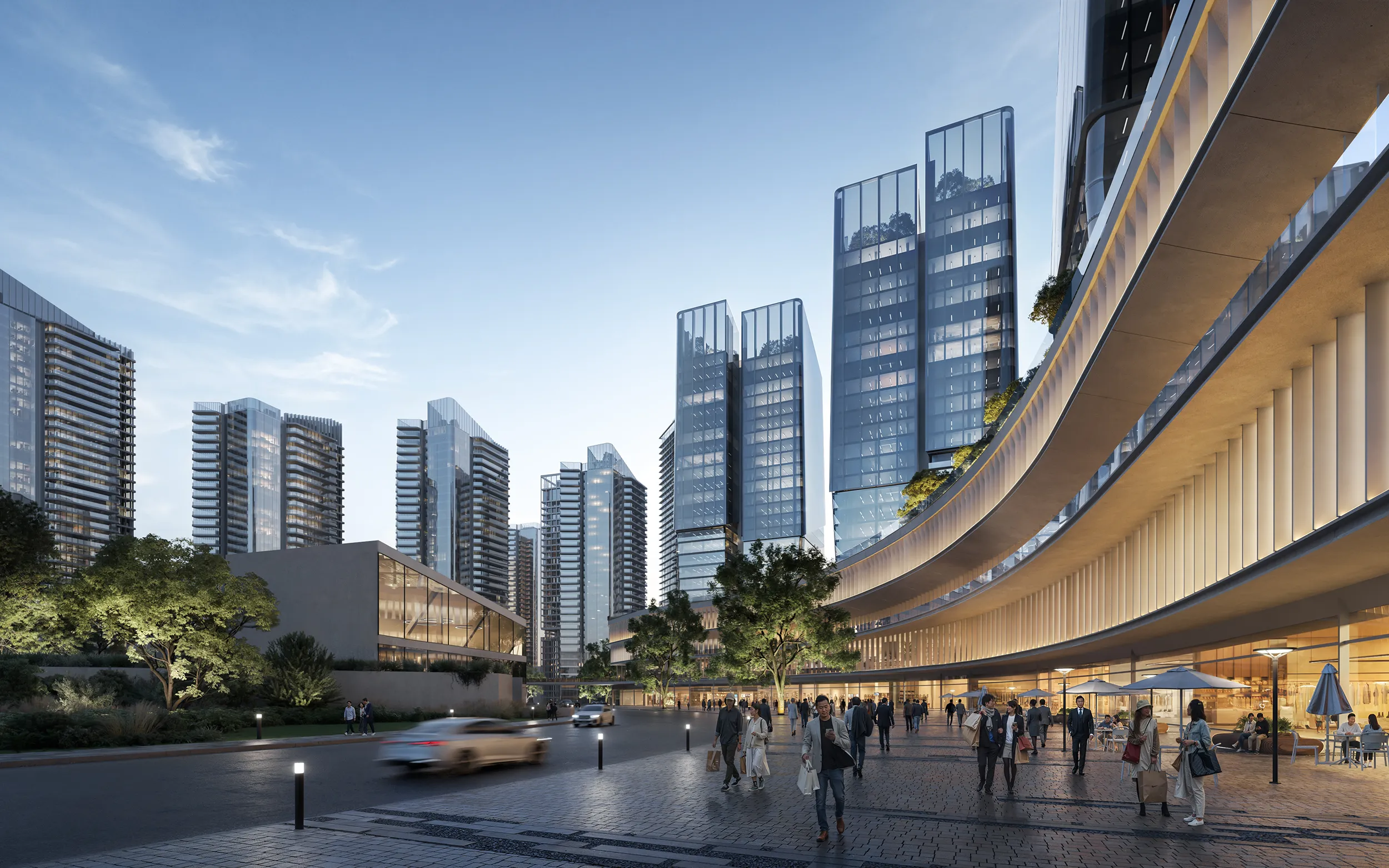
3D content works as a production system built on a single model. Exterior renders, interior views, walkthroughs, and 3D Animation Services for Real Estate are different outputs that originate from the same source and are used at different stages of presenting a property.
CoStar reports broader adoption of spatial and 3D content across listing platforms as part of standard property presentation workflows.
In online property search environments, these formats are used alongside listings, images, and floor plans within the same user journey across real estate platforms.
Immersive 3D Virtual Tours for Social Media
A virtual tour changes how a property is perceived in social feeds because it keeps the user inside the space instead of forcing them to interpret it from separate frames. They move through rooms in sequence, and the layout becomes clear through navigation rather than reconstruction.
What makes this effective is the reduction of steps between seeing and understanding. The user does not have to connect images, angles, and descriptions into one mental model, the structure is already there, and they can read it directly by moving through it.
For real estate teams, this creates a clearer form of interaction data.
3D Renders for Email and Landing Pages
Email and landing pages serve a different role within real estate online marketing because they address users who are already familiar with the project and are moving closer to evaluation. At this stage, the focus shifts from attracting attention to helping potential buyers understand how the property may function in everyday use. One example is Virtual Staging for Real Estate, where empty or unfinished interiors are presented with furniture, lighting, and spatial context that make layout, proportions, and room purpose easier to interpret before construction or furnishing is completed.
Google Ads Retargeting With 3D Property Visuals
Retargeting depends on recognition. The user needs to remember what they saw. 3D visuals reinforce that memory better than flat imagery because they preserve spatial structure. When the same environment reappears in ads, the recognition effect is stronger, and the return rate increases.
Content Marketing for Real Estate With 3D Assets
Content in real estate usually works through explanation of space, timing, and use rather than through promotion itself. Each piece of communication has to help the viewer understand how a project is structured and how it might be experienced once completed, especially in early stages when there is no physical reference yet.
3D assets support this by providing a spatial reference that can be reused across different formats of communication. They carry information about layout, proportions, and environment in a way that can be translated into still images, animations, walkthroughs, or sectional views without changing the underlying model. In this sense, they function as a stable reference point for all content built around a project.
When the same visual foundation is used across multiple touchpoints, the representation of the project remains aligned across channels. Over time, this affects how consistently the project is perceived and how clearly it is associated with a specific architectural and spatial logic within the market.
Floor Plans That Qualify Buyers Before Sales Calls
Floor plans shape the economic quality of incoming demand by introducing structure early in the decision process. When users interact with layout data, they form a clear understanding of scale, configuration, and usability before initiating contact with a sales team.
This creates a filtering effect at the level of intent. Inquiries that follow already come from users who have evaluated the spatial logic of the property, which reduces the share of interactions that do not progress further in the sales process.
For real estate companies and developers, 3D Floor Plan Rendering Services improve efficiency across the commercial funnel. Sales teams spend time on leads with higher readiness to proceed, follow-up cycles become shorter, and marketing spend is concentrated on interactions with a higher probability of conversion.
Real Estate Web Marketing With Approval-Ready 3D
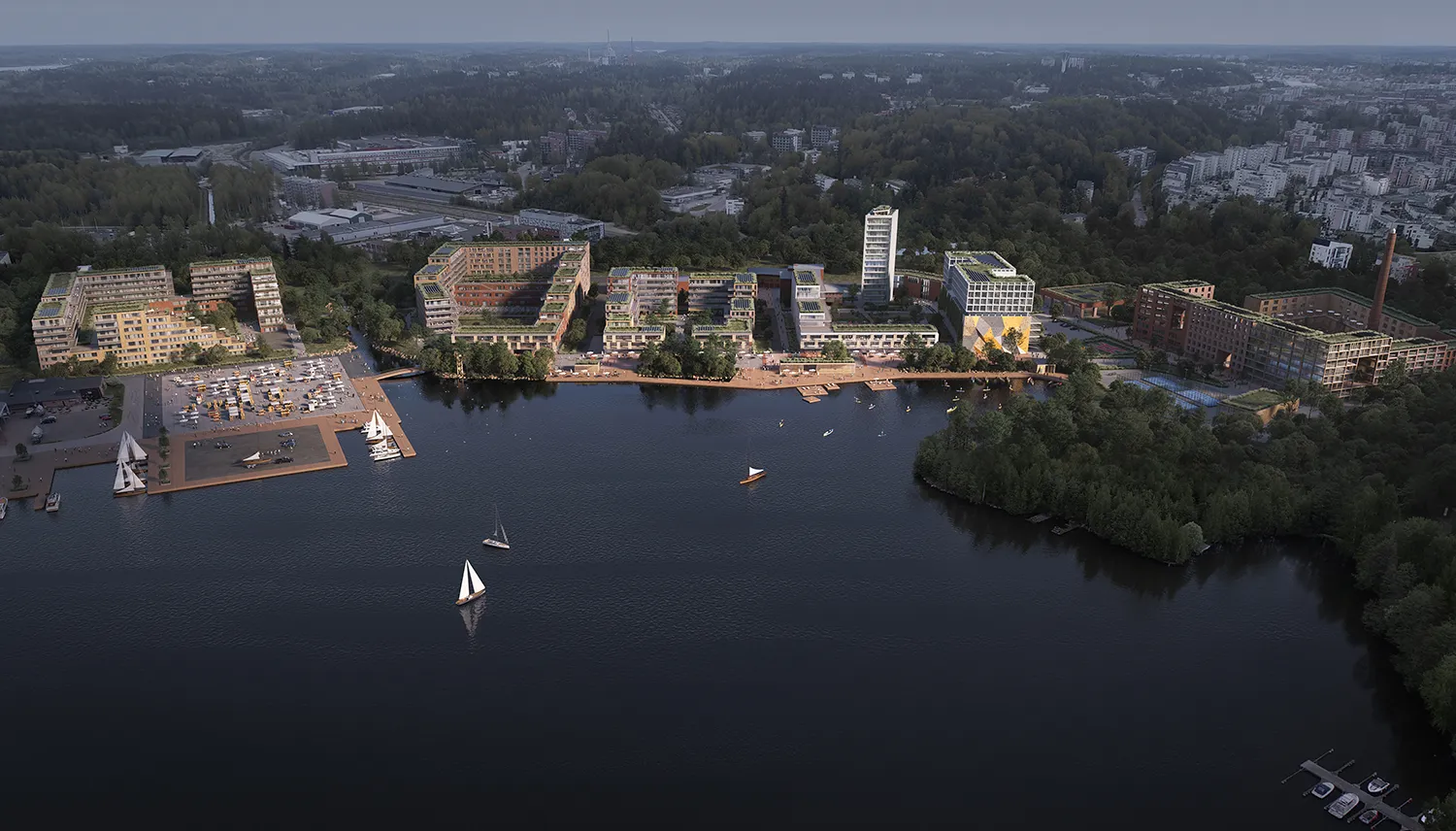
A real estate website built with 3D content presents each property as an interactive model inside the page. The user moves through rooms, checks layout, and reads the space without leaving the interface.
Every action inside the model leaves measurable signals: what areas are viewed, how long users stay, where they stop or return.
Web tracking is also changing in the same direction. Google’s Privacy Sandbox describes a shift away from external tracking toward data generated inside user interactions on the site itself.
Real Estate Online Marketing as a 3D Portfolio
A 3D portfolio allows teams to present a project as a complete system while also breaking it down into different formats depending on the purpose of communication. Instead of relying on a single type of visualization, the same project can be explored through renders, animations, floor plans, and interactive views, which is exactly what makes 3D Rendering Services for Real Estate important as part of the workflow, since it enables the same space to be studied in multiple visual variations without losing consistency.
This approach is used in residential and commercial real estate, as in adjacent industries such as hospitality. 3D Hotel Rendering helps communicate the same spatial logic in a different context. The ability to switch between formats makes it easier to study a project from multiple angles — visual, functional, and spatial — within one unified portfolio system.
Social Proof in Digital Marketing for Realtors
As projects are increasingly presented through structured 3D portfolios, credibility in digital marketing for realtors depends on how clearly real outcomes are connected to what users actually see. Completed developments, client feedback, and documented results gain stronger impact when they are supported by spatial representation of the same projects, because verification happens within the same visual context rather than through separate descriptions or claims.
This becomes even more relevant when these assets are distributed across social media strategy, where consistency of presentation directly affects perception. Strong social media graphics and well-planned social media scheduling ensure that the same level of visual credibility is maintained across different touchpoints, from listings to campaign posts.
In real estate digital marketing, buyers compare multiple listings quickly and rely on visual consistency to judge trustworthiness. When social proof is embedded directly into the presentation of a project through completed visuals, before/after comparisons, or 3D representations of finished developments, it strengthens confidence in the specific builder and overall project quality.
Analytics and KPIs for Real Estate Digital Campaigns
Once engagement shifts into 3D environments, evaluation naturally follows the same structure. Attention is no longer read through surface-level exposure, but through how users behave inside the model, how they navigate, what they explore, and how long they stay within specific parts of a project. These patterns become the main indicators of interest across campaigns built on 3D content.
Reusable 3D Libraries for Faster Time-To-Content
3D libraries solve a simple production problem: every new real estate project does not need to be visually built from scratch. Instead of recreating models, materials, and scenes each time, teams reuse existing 3D assets and adapt them to new developments. This shortens production cycles and allows campaigns to go live faster.
At the same time, it keeps the visual language consistent across projects, which is especially important in Marketing for Architecture Firms, where multiple buildings or phases need to feel like part of a single coherent portfolio.
All images © CYLIND
