High-rise Building Rendering Services




Ourpartners


Have a project?
We have ideas to discuss!
Skyscraper Rendering Services
We help high-rise buildings gain a compelling visual identity long before construction begins. Our photorealistic renderings clearly communicate scale, character, and architectural quality. With CYLIND, your skyscraper is presented professionally and truly at the highest level.
Elevate Your High-Rise Projects with Professional 3D Visualization
Tall buildings bring together many moving parts: design teams, investors, city planners, future tenants and marketing partners. Each group looks at the project from a different angle, and at some point drawings and spreadsheets stop being enough. Careful high rise building rendering makes it easier to talk about the same object in the same language, without guesswork.
Clear imagery helps people see the structure as it will sit in real urban surroundings: how it meets the street, how it reads on the skyline, how natural light moves through interior spaces, and how the massing responds to strict architectural design regulations. Instead of abstract discussion, you get a shared visual reference that supports decisions, reduces friction, and keeps the project moving.
Applications of High Rise Building Rendering
For each rendering project, we define who needs to read the images and which questions they must answer. Carefully planned views and compositions let the renderings highlight massing, access, and public spaces with great detail.
Pre-Construction Marketing & Pre-Sales
Before construction starts, everything important about a tower is still on paper. Buyers and tenants, however, need to understand what they are committing to. Consistent visuals show spatial layouts, material choices, and the quality of daylight in key areas, so early-stage marketing doesn’t rely on imagination alone.
Investor Presentations & Funding Approval
Investment committees focus on risk, clarity and long-term value. Well-structured visuals provide a straightforward visual aid: they communicate structural integrity, program distribution, and commercial logic without forcing everyone to read technical documents. Good imagery doesn’t replace numbers, but it makes them much easier to discuss.
Urban Planning & City Approval Submissions
City planners care about impact: views, shadow studies, traffic flows, and visual compliance with existing regulations. Renderings tailored to these questions help prove visual compliance and show how the building behaves at street view, in aerial view, and within the broader skyline. This reduces back-and-forth and gives planning officers something concrete to assess.
Architectural Competitions & Award Submissions
In competitions, the jury usually has limited time. Images that are composed with clear focal points, balanced lighting and readable detail make it easier to see the underlying idea of the skyscraper design. The goal is not to over-dramatize, but to present the project in a way that matches the level of thought behind it.
Design Development & Client Communication
As designs progress, many small decisions accumulate into large changes. Visualizations help project teams evaluate façade options, lighting solutions, interior design directions, and environmental impact in a format that everyone can read at a glance. This is often where detailed renderings prevent misunderstandings that would be expensive to correct later.
If you’re working specifically with tower typologies and want to go deeper on early visual strategies, see also Tower Rendering for Architects.
Comprehensive Skyscraper Rendering Services by CYLIND
CYLIND operates as a skyscraper rendering service focused on high quality renderings that support planning submissions, investor decks, and marketing materials, keeping geometry, lighting, and context at the highest quality.
Photorealistic Still 3D Visualization
Stills are the backbone of most client presentations and approval packages. They show scale, materiality, and context in one frame, and can be reused across print, digital campaigns and technical reports. When needed, they can also support more specialized tasks such as natural light analysis or environmental impact illustrations.
High-Rise Animation & Fly-Through Services
Animated visuals help explain movement: how people arrive, how they pass through the lobby, and how different programs connect vertically. This is useful not only for marketing but also for internal coordination, because circulation issues and bottlenecks become visible immediately.
360-Degree Virtual Tours
360-degree tours give viewers the freedom to explore on their own. They work well when stakeholders are in different locations or when you need to walk someone through a complex space without being physically present on site. They also add value to client presentations by making the experience more concrete.
Technical Floor Plans & Site Plans
Some situations call for a more restrained graphic language. Clean, visualized plans and site diagrams help bridge the gap between pure line drawings and full cg images, especially when you’re working with city planners, consultants or technical reviewers.
Why Leading Architects Choose CYLIND as Their High Rise Rendering Company
Architects rely on a high rise rendering company that brings technical expertise in structure, facades, and construction logic, so every image aligns with how the tower will actually be designed and built.
Deep Technical Expertise in Complex Projects
High rise projects come with their own set of constraints: severely limited plots, tight construction phasing, complex curtain wall systems, and sensitivity around environmental impact. A team that understands these constraints can reflect them accurately in imagery, rather than smoothing them out for aesthetics alone. For a broader context on workflow and regional standards, you can also refer to 3D Rendering Services in the USA or 3D Rendering in New York.
Full Customization & Flexible Workflow
Every office has its own tools, naming conventions and approval structures. The workflow adapts to your process, not the other way around. Whether the source material is BIM, CAD, sketches or mixed, the aim is to integrate into your pipeline with minimal friction and keep all the efforts traceable and transparent.
Fast Turnaround Without Quality Compromise
Deadlines in commercial real estate and high rise projects are rarely generous. Even under time pressure, attention to camera angles, lighting balance and material behavior remains non-negotiable, so the images can stand up both in public campaigns and in specialist technical meetings.
End-to-End Skyscraper Rendering Studio Services
From early massing studies to final marketing sets, the project stays within a single skyscraper rendering studio, which means visual language and standards remain consistent. This continuity is particularly important when you’re showcasing high rises across multiple phases or producing several rounds of imagery for the same skyscraper project.
Expert Highrise Rendering: Showcasing Projects Through Multiple Perspectives
As a high rise rendering studio, we plan perspectives that explain circulation, views from panoramic windows, producing lifelike visualizations that serve equally well in design reviews and public presentations.
Aerial View Renderings: Context Within Urban Surroundings
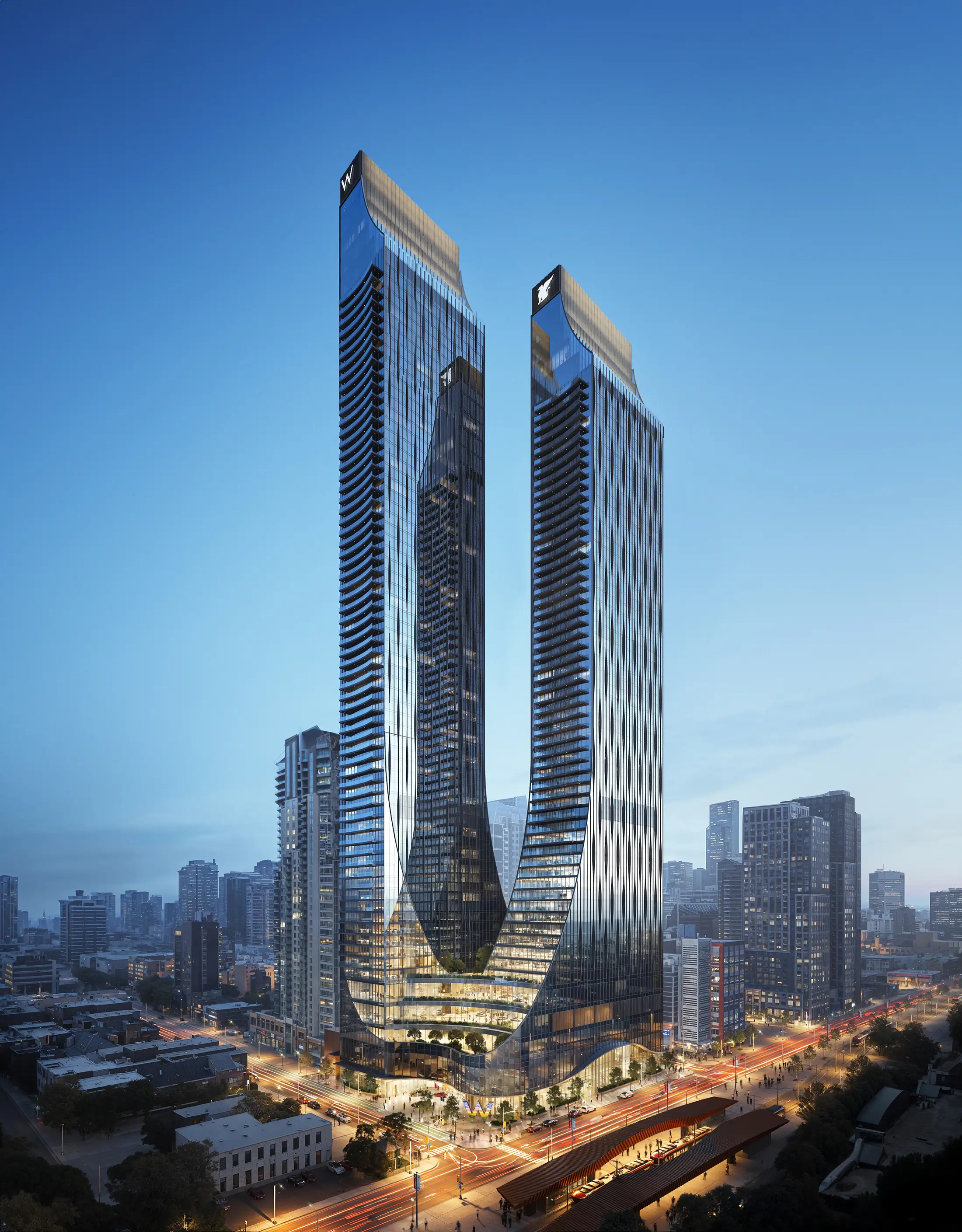
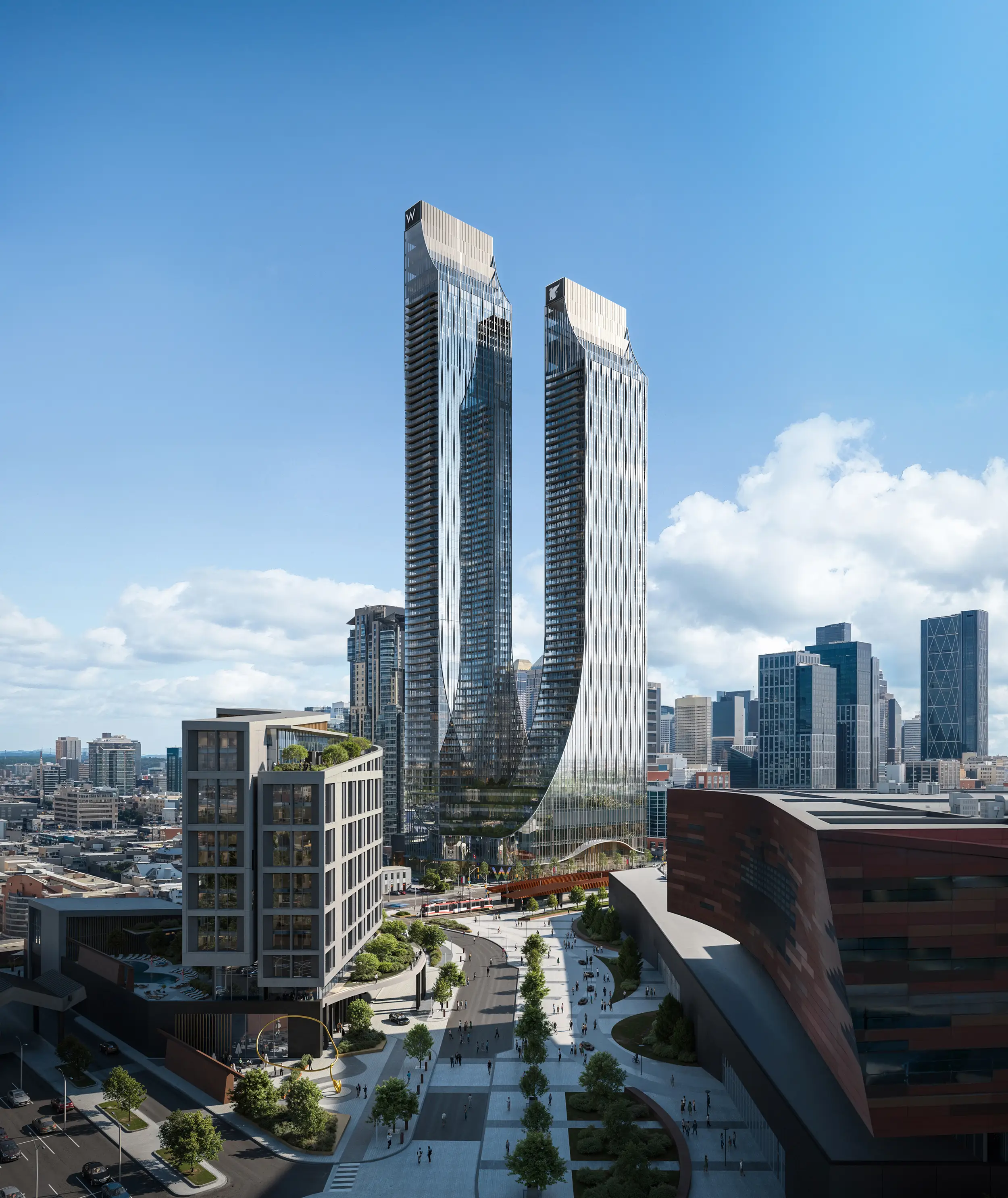
Aerial views explain how the tower fits into the wider city: connections to major routes, adjacencies to key landmarks, and the role the building plays in the skyline. These views are often used with city planners and for strategic overviews in board-level discussions. For more on this type of imagery, see Bird Eye View Rendering Services.
Street View Renderings: Ground-Level Human Experience
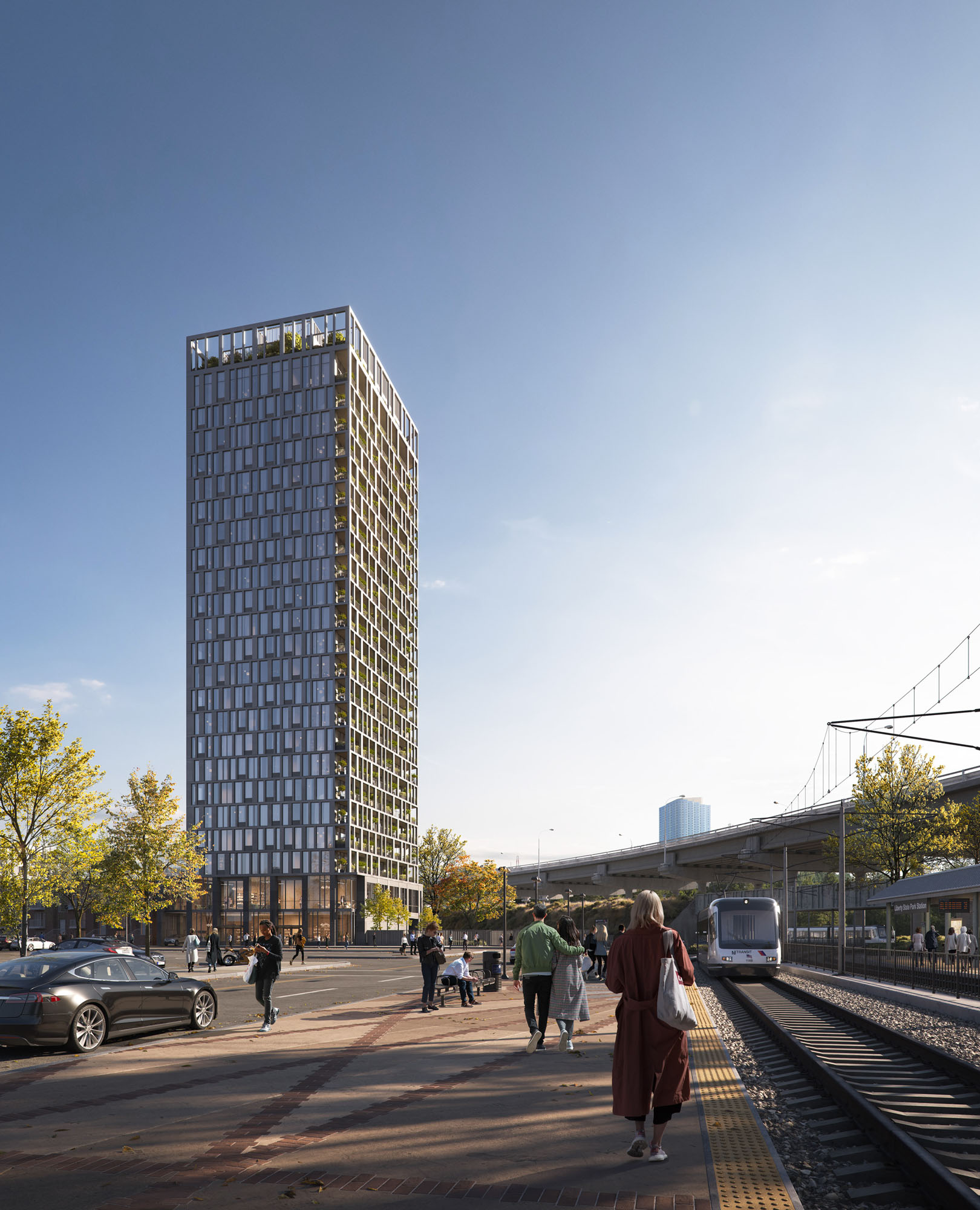
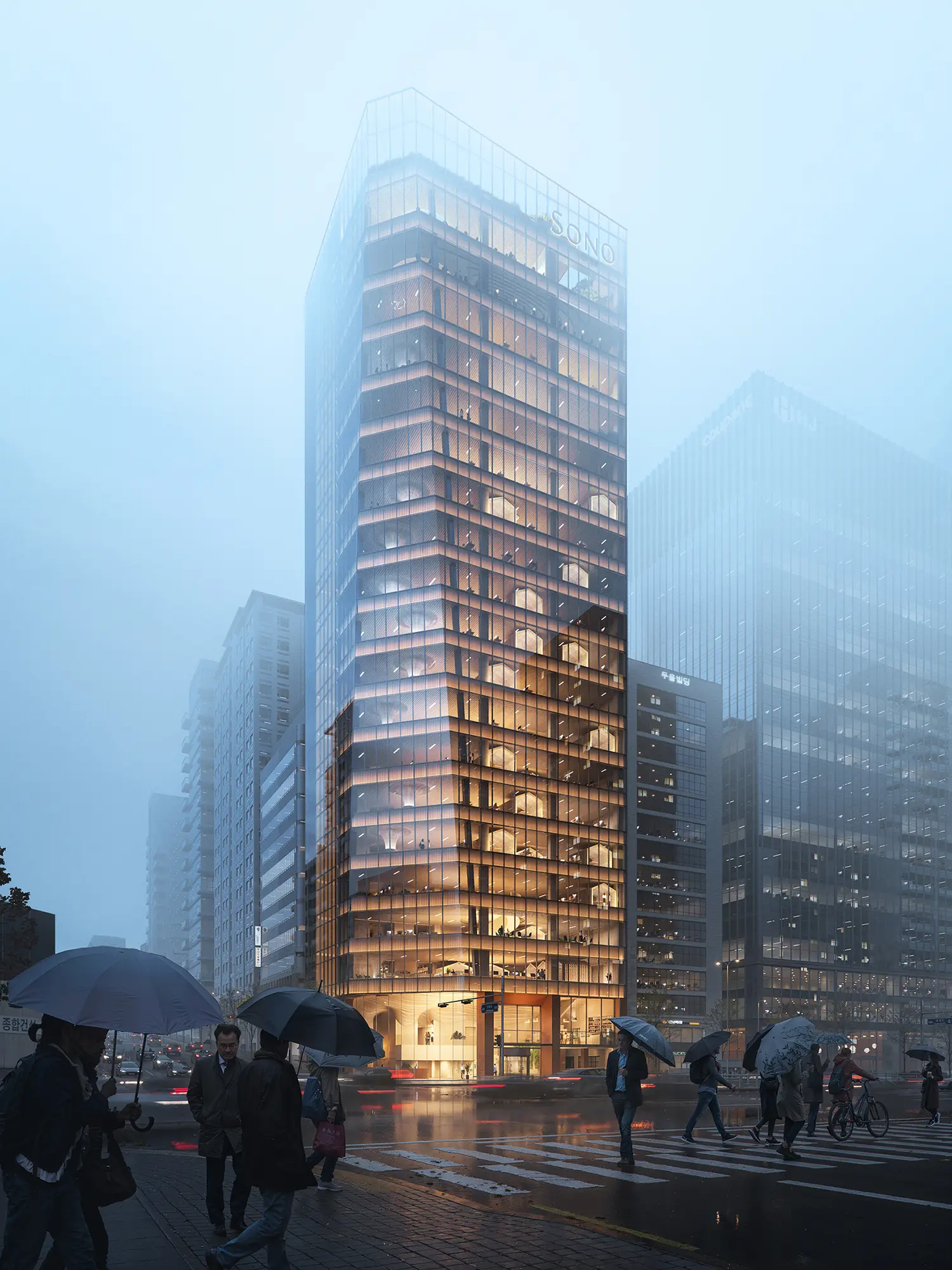
Street-level images focus on what people notice when they stand next to the building: entrances, glazing, lighting, signage and the relationship between interior spaces and the public realm. Here, small decisions in lighting and composition make a significant difference in how welcoming or closed the building feels.
Worm’s Eye View: Emphasizing Height & Grand Structure
A worm's eye view uses a low angle or very low angle to show height and structural rhythm. Used carefully, it emphasizes the grand structure without resorting to distortion. This type of image is often used in competitions and key visuals where the sense of vertical scale is central.
Close-Up Renderings: Material Quality & Intricate Details
Not everything needs to be seen from a distance. Close up renderings draw attention to quality materials, junctions, and all the intricacies of façade systems. These views help teams and clients evaluate how the building will read at arm’s length, not just from across the street.
Rooftop & Terrace Renderings: Amenity Spaces
Amenity areas on rooftops and terraces play a growing role in the value of high rise buildings. Visuals in these spaces focus on views, comfort, microclimate, and lighting solutions that support different times of day and patterns of use.
Interior Design Visualization: Lobby & Common Areas
Lobbies and shared spaces often carry most of the day-to-day experience. Here, the balance between natural light and artificial lighting, sightlines, and interior design choices is critical. The aim is not to over-style, but to make sure the images match the intended atmosphere and use.
Nighttime Renders: Exterior Lighting & Illumination Design
Nighttime renders are their own category. They concentrate on exterior lighting, illumination design, and how the building behaves visually once the sun goes down—how much it stands out, how it communicates presence, and how lens flares and reflections are handled without overstatement.
Our Proven Skyscraper Render Production Process
In production, we track revisions carefully and refine materials, lighting, and context step by step, so intricate details remain consistent from early tests to final output.
Discovery & Brief: Understanding Your High Rise Concepts
The process begins with a clear brief: design intent, target audiences, regulatory context, and specific questions the imagery needs to answer. At this stage, it’s also useful to identify where images will be used—client presentations, planning packages, competitions, or marketing.
3D Modeling & Technical Setup
The 3D base is either built or cleaned up from supplied files. Attention is given to structural integrity, façade depth, floor-to-floor relationships, and site conditions. The technical setup includes base lighting, reference cameras and an initial environment for consistent testing.
Visualization & Rendering Production
This is where the visual language is defined. Materials, context, and lighting are refined step by step, and test views are generated to check readability. The goal is to arrive at images that are informative from multiple perspectives without relying solely on post-production effects.
Client Review & Revision Rounds
Feedback is handled in structured rounds, so changes remain manageable and traceable. Instead of restarting, each iteration builds on the previous one, which is especially important in larger rendering services packages where many images are interdependent.
Final Delivery & File Formats
Once approved, images are rendered at the required resolution and prepared for different uses: print, web, large format displays or internal documents. If animation or other formats such as 360s are included, they are delivered in a way that can be integrated directly into presentations and platforms.
Featured High Rise Rendering Projects
This section usually includes a selection of high rise projects where different approaches were used: competition entries, commercial towers, mixed-use schemes, and residential skyscrapers. To explore how complex mixed programs are visualized in practice, you can look at High-End Mixed-Use Development Renderings.
What Sets CYLIND Apart as a Leading Skyscraper Rendering Company
A skyscraper rendering company adds value when it understands both sides of the work: the demands of architectural rendering and the pressures of development schedules. The aim is not just to produce a skyscraper render that looks polished, but to provide material that holds up in technical conversations, public consultations and long-term documentation.
Transparent Pricing for High Rise Rendering Service
Budgets for visual work are rarely unlimited, especially in large teams. A clear, itemized approach to a high rise rendering service makes it easier to plan which views are essential, which can be phased, and how to reuse existing work efficiently without compromising on quality.
CYLIND High Rise Rendering Studio: Your Partner for Complex Projects
A high rise rendering studio becomes most useful when it stays with a project over time: from early diagrams through to marketing material for leasing or sales. The continuity of people and process makes it easier to keep visual language consistent and to adjust imagery as the project evolves.


FAQS
What level of detail can you achieve in high-rise apartment rendering?
An image for high-rise apartment rendering can be tuned to different levels of detail depending on its purpose. For marketing, the focus is usually on atmosphere, furnishings and natural light; for internal design reviews, the priority may shift towards layouts, junctions and technical clarity.
How do you handle rendering projects with strict architectural design regulations?
When strict architectural design regulations apply, camera positions, heights and focal lengths are chosen carefully, and outputs are coordinated with planning documentation. The objective is to provide material that city planners can use directly as part of their assessment.
How do you incorporate environmental impact and sustainability features?
Shading patterns, natural light, planting, and the relationship to public space are all visible in well-constructed imagery. These elements help illustrate environmental impact and make sustainability strategies easier to communicate.
Do you provide renderings that show natural light studies throughout the day?
Yes. Our approach to highrise rendering includes dedicated light-tracking sequences that illustrate how illumination shifts through morning, midday, and evening. These studies help clarify essential high rise concepts within the future building and create a lasting impression for clients and reviewers.
How do you handle revisions when client presentations require adjustments?
Revisions are logged and applied in controlled steps, so prior decisions are not lost. This is particularly important when multiple stakeholder groups are using the same images for different types of client presentations.
Can you create lifelike visualizations that show the building's relationship to existing urban context?
Yes. Integrating the building into the existing city—through aerial view, street view and long-range perspectives—helps show how the project will sit alongside its neighbours rather than in isolation.
How do you ensure the highest quality in both daylight and nighttime renders?
Quality comes from consistent modeling, measured lighting, and careful post-production. The same principles apply whether the image is focused on bright daylight or more complex exterior lighting setups at night.