Hospitality 3D Rendering Services






Ourpartners


Have a project?
We have ideas to discuss!
We deliver five-star visualization experiences for the hospitality industry, combining design precision with service excellence. Our team anticipates client needs with attention, timing, and care in every detail. Each 3D rendering captures the spirit of comfort, atmosphere, and brand identity, helping developers and operators present their hotels with confidence in key hospitality markets such as the USA, the United Kingdom, the United Arab Emirates, Saudi Arabia, Spain, and Thailand, as well as in boutique retreats across fast-growing destinations.
Types of Hospitality Architectural Rendering Services We Offer
Our hospitality visualization services support every aspect of design communication, including high quality renderings of interiors and exteriors, animations, and immersive VR experiences.
Photorealistic 3D Rendering for Hospitality Spaces
Our hospitality architectural 3D rendering delivers photorealistic representations of interiors and public areas based on architectural drawings and brand standards. Each image conveys material quality, lighting behavior, spatial hierarchy, and seating logic for evaluation and approval. These hospitality renderings support FF&E decisions, procurement alignment, and stakeholder consensus through high‑resolution, review‑ready outputs. For hotel‑specific guidance and examples, see 3D Hotel Rendering.
3D Virtual Tours and Interactive Experiences
When circulation and guest flow must be assessed, interactive walkthroughs present controlled movement through key zones such as lobbies, suites, lounges, restaurants, and pool decks. Virtual tours are utilized in internal presentations, franchise reviews, and investor pitches, and can be repurposed for pre-opening marketing when interactive experiences are required.
CG Animation for Dynamic Guest Experience Stories
3D animation builds a single timeline for the space and communicates arrival, guest routes, dwell points, and service sequences across the lobby, rooms, F&B, pool deck, and wellness. Camera paths highlight key features and wayfinding cues. Sound design with ambient audio, music, and an optional voiceover sets brand mood and supports navigation. This format is suited to owner and operator reviews, pre-opening launches across digital channels and sales suites, brand approvals for complex public areas, and investment presentations where experience and pacing must be shown with precision.
Aerial Visualization and Surrounding Landscape Integration
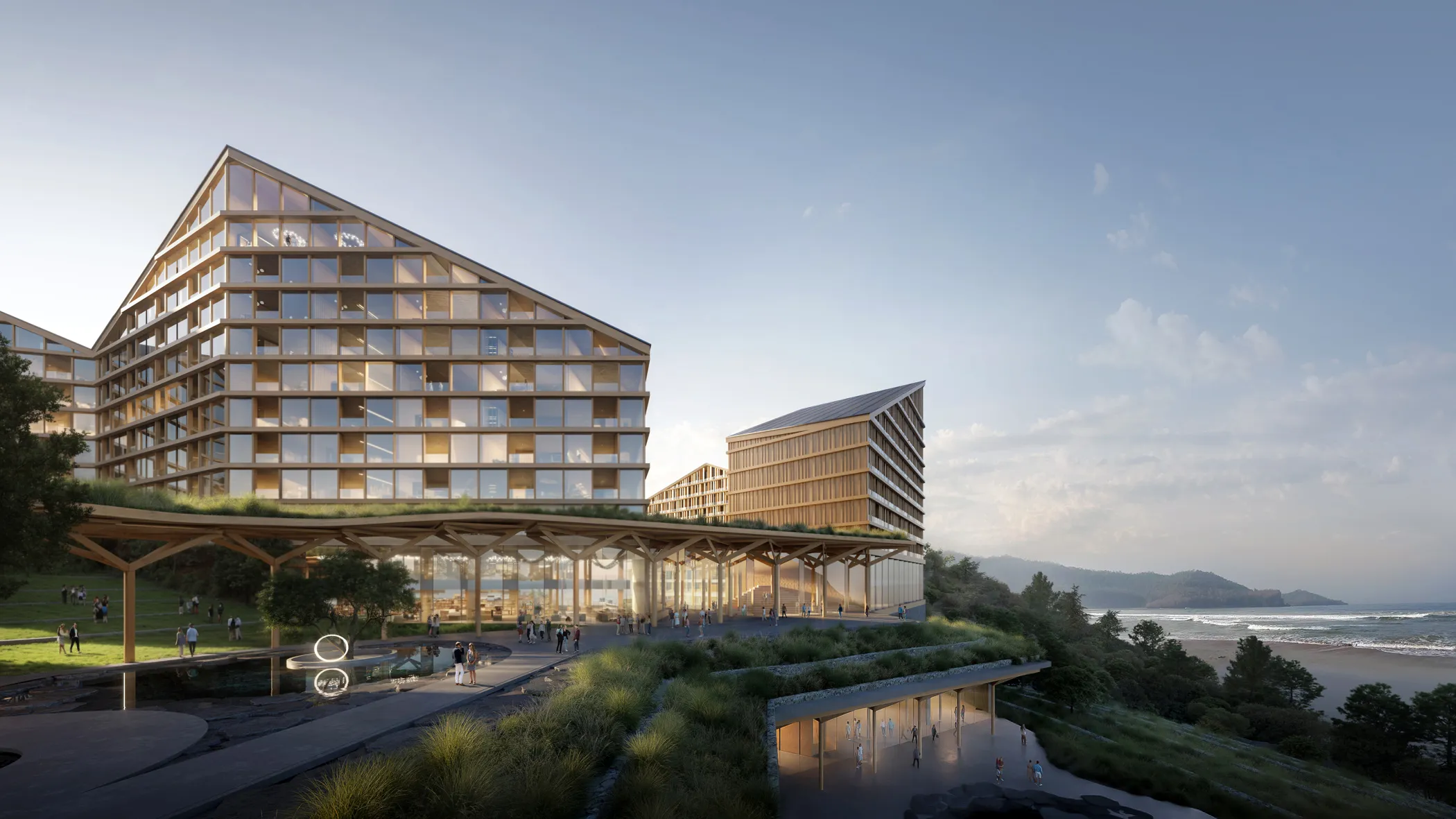
Aerial visualization positions the hotel within its site and context, showing access, orientation, view corridors, surrounding landscape, adjacent development, and placement of shared amenities and pools. The material clarifies arrival, circulation, and massing logic, confirms topographic constraints, and supports decisions on landscape strategy. It is used for investor decks, planning submissions, and marketing for resort and urban hotels where location and environmental fit are key evaluation criteria.
VR/AR for Immersive Hospitality Visualization
VR enables human‑scale evaluation of lobby proportions, room configurations, and spatial transitions. AR overlays proposals on existing structures during renovation planning. These tools support high‑stakes approvals and funding negotiations by removing interpretation gaps and providing precise previews of outcomes.
Use Cases for Hospitality 3D Rendering
Our residential rendering services and hospitality expertise support visualization of hotel rooms, lobbies, outdoor amenities, and full master plans. These high-resolution renderings allow developers to showcase design intent, test lighting, and visualize operational flow in ways that engage potential customers and enhance collaboration between architects and operators.
Interior Design and Hotel Rooms Visualization
Hospitality design 3d rendering supports room typologies, finishes, lighting temperatures, and FF&E layouts at a decision-ready level. These hospitality renderings align architects, operators, and brand teams on practical details before procurement.
Space Planning, Zoning, and Hotel Lobby Rendering
In public areas, renderings verify circulation, seating logic, reception placement, and the relation between the hotel lobby, lounge, bar, and back-of-house. Hospitality rendering services make service scenarios visible, reducing ambiguity in coordination meetings and supporting clear communication across disciplines.
Exterior Rendering and Facade Design for Hotels
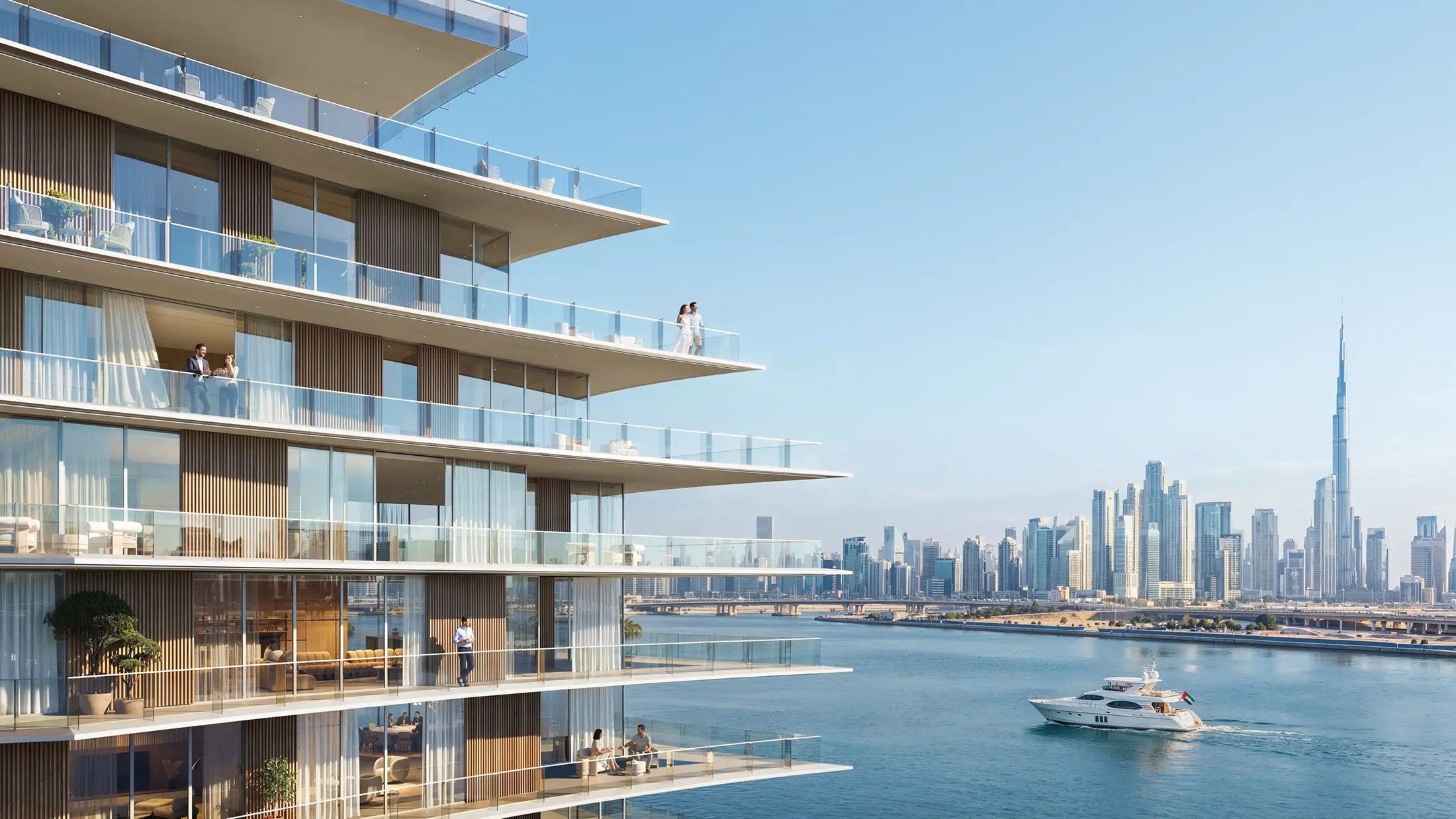
Exterior rendering shows massing, façade articulation, signage, and the surrounding landscape with accurate daylight and night scenes. These images support planning submissions and investor materials where context and access need to be explicit. For region-specific standards and examples, refer to 3D Rendering in the USA and 3D Architectural Visualization in Florida.
3D Rendering for Hotel Marketing and Campaigns
3D rendering for hotel marketing provides consistent, high-resolution visuals for digital campaigns, booking platforms, and investor decks. Marketing teams use these assets to establish tone, support customer engagement, and attract potential guests ahead of opening. Photorealistic renderings keep messaging uniform across channels without waiting for photography.
Amenities Showcase Including Pool Areas and Common Spaces
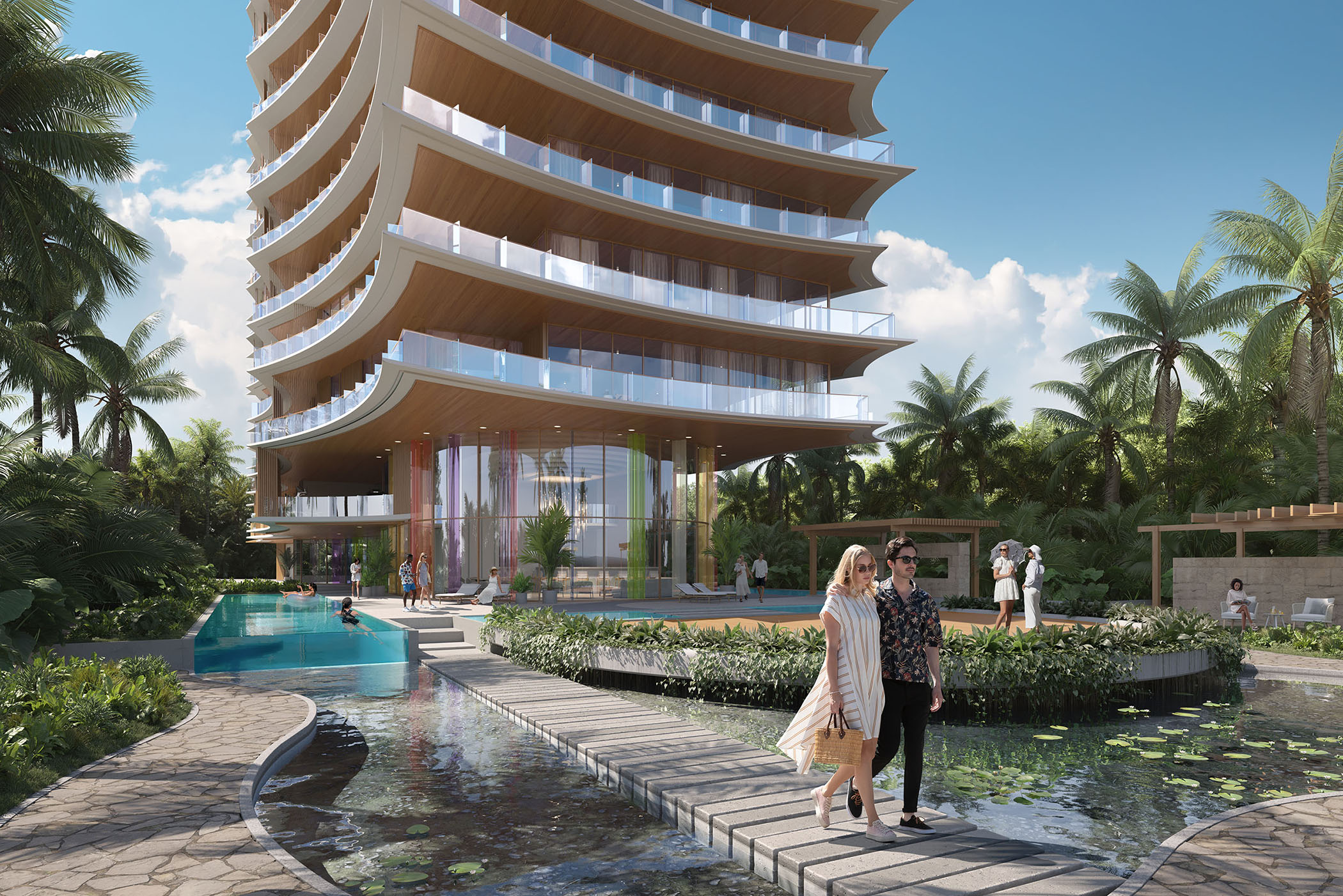
Hospitality architectural 3d rendering communicates atmosphere and operation in pool decks, restaurants, bars, lounges, fitness, and wellness. Ambient lighting, reflections, and crowd density are calibrated to the brief so that the guest experience is evident. For F&B concepts, approaches in 3D Restaurant Rendering Services help present service flow and brand character within the hotel’s identity.
Sustainable Design Visualization for Eco-Friendly Hospitality Projects
Using 3d rendering for hospitality spaces, daylight studies, material schedules, and landscape integration can be evaluated early. This supports informed decisions on environmental impact and long-term operations. Where funding requires a clear presentation of targets, the same deliverables assist 3d hospitality investments by showing measures and outcomes with visual evidence.
Benefits of Hospitality Design 3D Rendering
Lifelike visuals for hospitality help hotels gain a competitive edge in design and marketing. The process reduces errors, supports saving costs, and improves communication for many hotels that want to convince investors and connect with future guests through confident visual storytelling.
Enhanced Marketing and Attracting Potential Guests
Hospitality 3d rendering provides high quality, consistent visuals for use across all marketing materials and digital platforms. Realistic renderings and stunning visuals help attract potential guests and investors before construction begins, conveying atmosphere, lighting, and brand tone with precision. These photorealistic renderings strengthen marketing teams by giving them content adaptable for brochures, online campaigns, and social media. For complex hospitality spaces, 3D visuals support booking decisions and create an immediate emotional response through lifelike rendering and ambient lighting.
Improved Design Precision and Decision-Making
Hospitality architectural 3d rendering improves coordination between architects, interior designers, and operators. Detailed, realistic visualizations clarify finishes, lighting behavior, and spatial logic, ensuring all participants make informed decisions early in the rendering process. This level of accuracy shortens approval cycles, reduces revision rounds, and helps maintain design intent through construction. The outcome is a coherent visual and operational strategy that aligns with both project scope and brand standards.
Cost Savings and Risk Mitigation
Early visualization identifies conflicts in layout, accessibility, or lighting before they reach the construction phase. By detecting design discrepancies and performance issues in advance, hospitality rendering services significantly reduce rework and delays. This not only saves costs but also secures investor confidence by demonstrating technical and operational readiness. Detailed rendering projects also enable forward-thinking developers to test different materials and lighting options without physical mockups, minimizing waste and improving environmental impact.
Attracting Investors with 3D Hospitality Investments
3d hospitality investments rely on clear visual communication. High-resolution hospitality renderings demonstrate spatial logic, design quality, and operational flow in a format investors understand immediately. These visuals help secure financing by transforming technical drawings into persuasive imagery that reveals potential value and guest experience. Rendered presentations often become a core part of investor pitches and feasibility studies, providing a visual bridge between concept and financial decision-making.
Boosting Guest Experience and Satisfaction
Realistic hospitality architectural 3d renderings help teams refine the guest journey—arrival, circulation, and stay experience—before any physical build-out. Visual simulations show how design affects comfort, wayfinding, and emotional engagement. By anticipating service flow and operational visibility, hotel owners can optimize space use and improve guest satisfaction at launch. These visuals also serve as valuable training and communication tools for staff and management before opening.
Gaining a Competitive Edge in the Hospitality Industry
In a saturated hospitality industry, strong visual storytelling defines brand differentiation. 3d rendering for hospitality spaces ensures visual consistency and clarity across all stages of presentation, from concept to pre-opening campaigns. The ability to present projects with high-resolution renderings, intricate details, positions brands ahead of competitors, improves customer engagement, and long-term recognition. Combined with immersive experiences such as virtual tours and animations, 3D visualization becomes an essential strategic tool for maintaining a competitive advantage and securing new business opportunities.
Why Choose Us as Your Hospitality Architectural Rendering Company
We focus on high quality renderings and a level of service that reflects five-star standards. Our hospitality visualization approach combines technical accuracy and visual refinement, helping clients maintain a competitive edge and build trust with investors, operators, and design teams.
Extensive Experience in Hotel Project Visualization
As a hospitality architectural rendering company, we specialize in projects that require operational accuracy and brand alignment. Our team has completed complex projects across resorts, urban hotels, and boutique properties, translating architectural and interior concepts into clear, decision-ready visuals. Each rendering reflects both the aesthetic and functional principles of hospitality design, ensuring consistency from master plan to guest room. This depth of experience allows us to anticipate challenges early and maintain quality under tight timelines.
Client-Focused Approach with Clear Communication
Every project is managed through a transparent and structured workflow designed to support clear communication at all stages. A dedicated project manager acts as the main contact, coordinating between clients, architects, and marketing teams. Feedback is implemented in structured revision rounds, maintaining accuracy and predictable delivery. This client-centered process builds trust and allows all participants to remain aligned on priorities, deadlines, and design intent.
High-Quality, Realistic Renderings with Intricate Details
Our hospitality architectural rendering services are defined by precision, consistency, and control of intricate details. Lighting calibration, material fidelity, and ambient behavior are refined until every scene conveys a realistic and credible atmosphere. Each realistic rendering meets the visual standards required for brand submissions, investor decks, and high-resolution marketing outputs. The result is a portfolio of high-quality renderings that support informed decision-making and maintain visual coherence across all communication materials.
Proven Track Record in Complex Projects and High-Resolution Outputs
We deliver hospitality architectural 3D rendering solutions that perform across formats—from concept presentations to high-resolution renderings for campaigns and investor materials. Our workflow integrates technical precision with artistic direction, ensuring that every frame meets both design and commercial objectives. With experience in multi-phase developments and large-scale hospitality investments, we maintain consistent visual quality while adapting to diverse brand and market requirements. In terms of depth and effectiveness, these solutions are aligned with best practices in Commercial 3D Rendering Services, enabling persuasive and competitive visual presentations of hospitality projects.
Our Portfolio of Hospitality Renderings
Our portfolio showcases high resolution renderings, each built as a realistic image that conveys light, material, and atmosphere with precision.
Our Hospitality Rendering Process
Our rendering process keeps quality, timing, and scope under control for each hospitality project. The team manages modeling, lighting, and post production, maintaining high quality renderings and efficient workflows for developments of different scales.
Initial Project Discussion and Goal Setting
Each hospitality rendering project begins with a detailed discussion of objectives, documentation, and expected outcomes. During this stage, we analyze architectural drawings, brand standards, and target deliverables to define the project scope and level of detail required. A dedicated project manager ensures clear communication between all stakeholders and establishes workflow priorities, milestones, and deadlines. This structured start guarantees that design intent, marketing goals, and operational needs are fully aligned before production begins.
Draft, Concept Creation, and Mood Boards
The creative phase begins with concept sketches, lighting studies, and mood boards that define the visual direction and emotional tone of the project. Materials, color palettes, and composition are tested through preliminary renders to confirm atmosphere and functionality.
Feedback, Adjustments, and Revision Rounds
Feedback is integrated through structured revision rounds, during which all comments are consolidated and implemented across the rendering project. Adjustments may include refinements to lighting temperature, surface materials, furniture layouts, or camera framing. This disciplined approach minimizes redundant edits, maintains project momentum, and ensures that every render meets both technical accuracy and brand requirements.
Rendering, Post-Production, and Final Product Delivery
Once all approvals are confirmed, the team proceeds with the final hospitality architectural 3D rendering. Post-production includes color calibration, depth correction, and fine-tuning of ambient effects to achieve lifelike rendering results. Deliverables are exported in high-resolution renderings suitable for print, digital, and large-format applications. Each final product undergoes quality control to ensure consistency across all outputs and readiness for marketing, investor, and presentation use.
What to Provide for Your Hospitality Rendering Project
To achieve consistent results, we work with accurate drawings, models, finishes, and brand references. These inputs allow us to produce high-resolution renderings that communicate design intent clearly to investors, design teams, and future guests.
Drawings, Models, Floor Plans, and Elevations
To ensure architectural precision, please provide CAD, Revit, SketchUp, or BIM files that reflect accurate geometry and scale. These assets form the technical base for every hospitality rendering project and allow us to maintain consistency between architectural drawings and final visuals. The inclusion of detailed floor plans and elevations ensures correct alignment of proportions, lighting, and camera angles in each realistic visualization.
Materials, Finishes, and Reference Images
Provide finish schedules, material samples, and reference images that express the intended mood and design direction. This information helps us match brand standards, color palettes, and ambient lighting accurately. Where available, mood boards and FF&E lists improve the fidelity of hospitality architectural 3d renderings and guarantee that surface qualities, textures, and reflections correspond to the design intent.
Project Scope, Detail Required, and Key Features
Before production begins, we define the project scope, number of views, and the detail required to determine the appropriate workflow. Identify key features such as lobby focal points, pool areas, or signature amenities that need emphasis in the visuals. A clear understanding of scope and focus ensures efficiency in both time and cost management while preserving high-quality renderings throughout the rendering process.
Pricing for Hospitality Architectural 3D Rendering Services
Pricing depends on project size, the number of views, and the depth of detail required. Large projects with multiple renderings or extended marketing campaigns may require more production time, so each proposal balances saving costs and transparent expectations on deliverables.
Factors Affecting Hospitality Rendering Costs
As with all hospitality architectural rendering services, costs vary depending on project scale and type of deliverables.
Pricing depends on several key factors, including the number of spaces and, level of detail required. Additional parameters, such as animation and interactive experiences, may affect the scope and delivery time.
Average Pricing Ranges
Budgets vary depending on project complexity and desired output. A single interior render typically ranges between $900 and $2,500, while full hospitality renderings covering multiple areas may range from $3,000 to $10,000. Large-scale hospitality projects or complex projects that include animation or virtual tours are estimated individually. Each client receives a transparent proposal based on the project goals, rendering process, and final deliverable requirements.


FAQS
How do 3D renderings help showcase intricate details like ambient lighting and surrounding landscapes in hospitality projects?
3D renderings simulate the interaction of light, materials, and environment, revealing how design choices behave under real conditions. Through ambient lighting control and contextual modeling of the surrounding landscape, architects and hotel owners can assess atmosphere, balance between interior and exterior spaces, and visual comfort long before construction begins. This precision ensures the final environment supports both functionality and guest experience.
What role does hospitality rendering play in creating immersive and memorable experiences for future guests?
Hospitality rendering translates spatial intent into emotional perception. By illustrating lighting transitions, circulation, and mood, it conveys how the design supports guest experience from arrival to stay. These visuals help brand teams refine comfort, visibility, and service zones, ensuring the final result delivers memorable experiences that align with guest expectations and brand values.
How can 3D visualization assist hotel owners in attracting investors through realistic visuals and mood boards?
3D visualization transforms architectural data into realistic visuals and mood boards that clearly communicate project potential. Investors can evaluate materials, scale, and atmosphere without a technical background. This clarity strengthens investor pitches, helping owners secure financing and present operational concepts as part of 3d hospitality investments.
In what ways do high-resolution renderings provide a competitive advantage in hospitality marketing channels?
High-resolution renderings give marketing teams assets suitable for campaigns across print, web, and social platforms. They maintain visual consistency and convey a premium perception of design quality. By showing spaces through stunning visuals, hotels gain a competitive advantage and improve customer engagement throughout all marketing channels.
How does 3D rendering support sustainable design choices and reduce environmental impact in hotel developments?
Through hospitality architectural 3d rendering, teams can analyze solar exposure, daylight distribution, and material performance. This process supports informed decisions that reduce environmental impact and improve energy efficiency. Visual simulations of sustainable systems and green strategies help communicate ESG goals to stakeholders and approval boards clearly and effectively.
Can hospitality renderings be adapted for various project scales, from small boutique hotels to large resorts?
Yes. Hospitality renderings are scalable and adaptable to different hospitality projects, from intimate boutique concepts to multi-building resorts. The rendering process adjusts the level of detail, atmosphere, and scope to fit each project’s objectives, ensuring the final result reflects design integrity and operational goals across any scale.